Quintara Microbial WGS provides whole-genome sequencing options for cultured bacterial and yeast samples, with Long-Read and Hybrid workflows designed to address different genome assembly and accuracy requirements. Long-Read Microbial WGS uses 30–50× Nanopore coverage to generate long reads that can span repetitive regions, resolve structural variations, and characterize other complex genomic features, making it well suited for de novo genome assembly. Hybrid Microbial WGS combines 30–50× Nanopore long-read coverage with 30–50× short-read coverage to provide high assembly continuity and improved consensus accuracy. Together, these workflows offer flexible solutions for reconstructing microbial genome structure and generating high-accuracy, polished genome assemblies.


Resolve repetitive and complex genomic regions

Generate reliable whole-genome sequencing data

Improve accuracy with complementary data

Choose the workflow that fits your research needs
What Is Nanopore Long-Read & Hybrid WGS Used For?
Create Build a genome from scratch | Resolve Reveal complex genome features and variation | Produce Generate a highly accurate consensus genome | ||
Create a de novo assembly without relying on a reference Work with a complex or heterozygous yeast isolate | Resolve repeats and larger structural changes Explore native-DNA methylation | Produce a highly polished consensus genome Call SNVs and short indels against a known reference Routine complete-genome work at the lowest listed price |
An integrated workflow from DNA QC and library preparation to sequencing, genome assembly, polishing, and analysis, with Long-Read and Hybrid options tailored to different project needs.

Cultured bacterial or yeast isolates

DNA QC and workflow-specific library preparation

30–50× Nanopore or Hybrid sequencing
De novo assembly, polishing, and genome analysis

Sequencing data, assemblies, and analysis results
Service | Technology & Coverage | Sample Type | Price | Turnaround Time |
Long-Read Microbial WGS | 30–50x Nanopore long-read | Bacterial | Starting from $90 | 1-2 Business Days |
Yeast | $150 | |||
Hybrid Microbial WGS | 30–50x Nanopore long-read + 30–50x NGS short-read | Bacterial | Starting from $165 | 5-10 Business Days |
Yeast | $255 |
* Your project clock starts once we receive your samples.
* DNA Extraction — $15 per sample. Available for both service options.
Long-Read Microbial WGS | Hybrid Microbial WGS | |
Technology | Nanopore long-read | Nanopore long-read + NGS short-read |
Coverage | 30–50× Nanopore | 30–50× Nanopore + 30–50× NGS |
Analysis Approach | De novo genome assembly | De novo hybrid assembly + polishing |
Best For | Designed for de novo assembly and high-contiguity reconstruction of bacterial and yeast genomes, especially when resolving repeats, complex regions, and large structural variations is a priority. | De novo assembly when both high genome continuity and strong consensus accuracy are required, especially for reference-quality isolate genomes and publication-oriented projects. |
Key Advantages | Long reads capture genome architecture without a close reference, with native-DNA methylation analysis available. | Combines Nanopore long reads for genome-wide structural resolution with short reads for improved base-level consensus accuracy. |
Key Consideration | Consensus accuracy may be lower than hybrid-polished results, especially for small indels and challenging regions. | Higher cost and a more involved workflow than Long-Read WGS, while still representing a consensus genome rather than low-frequency variants. |
Deliverables | • Sequencing & Assembly QC Report (HTML) • NanoPlot Sequencing QC • Bandage Assembly Visualization • CheckM Completeness & Contamination Assessment • Species Identification • De Novo Assembled & Annotated Consensus Genome • Raw Nanopore FASTQ Data • Methylation Analysis Report (optional) | • Sequencing, Assembly & Polishing QC Report (HTML) • NanoPlot Sequencing QC • Bandage Assembly Visualization • CheckM Completeness & Contamination Assessment • Species Identification • Polished, De Novo Assembled & Annotated Consensus Genome • Raw Nanopore FASTQ Data • Paired-End Short-Read FASTQ Data • Methylation Analysis Report (optional) |
Not necessarily. Coverage indicates how many times the genome is represented in the sequencing data, but it does not determine read length or assembly continuity. For de novo assembly, long reads can span repetitive and complex regions that very high-coverage short reads may still fail to connect.
Both workflows are designed for pure bacterial or yeast isolates and require high-quality genomic DNA. Mixed or contaminated samples may affect genome assembly and downstream analysis.
Yes. Organism type and expected genome size help determine sequencing requirements, data yield, and project pricing.
It means the total sequenced bases are roughly 30-50 times the expected genome size on average. Individual regions may receive more or less coverage.
No. Both Long-Read and Hybrid WGS can generate a de novo assembly without relying on a close reference genome. A suitable reference may be used for additional reference-based analyses when needed.
Choose Long-Read when the main goal is de novo assembly and genome structure, Hybrid when both assembly continuity and base-level confidence are important.
Yes. Additional analyses, including reference-based mapping, variant calling, and methylation analysis, may be available depending on project requirements and service availability. Methylation analysis requires native DNA.

Quintara delivers fast, affordable NGS sequencing using advanced platforms.
Discover more
Nanopore amplicon sequencing enables fast long‑read targeted validation.
Discover more
Quintara’s Nanopore plasmid sequencing: fast, affordable, nationwide.
Discover more
We Go Fast, You Go Forward
 sales.us@quintarabio.com
 1-617-789-6111
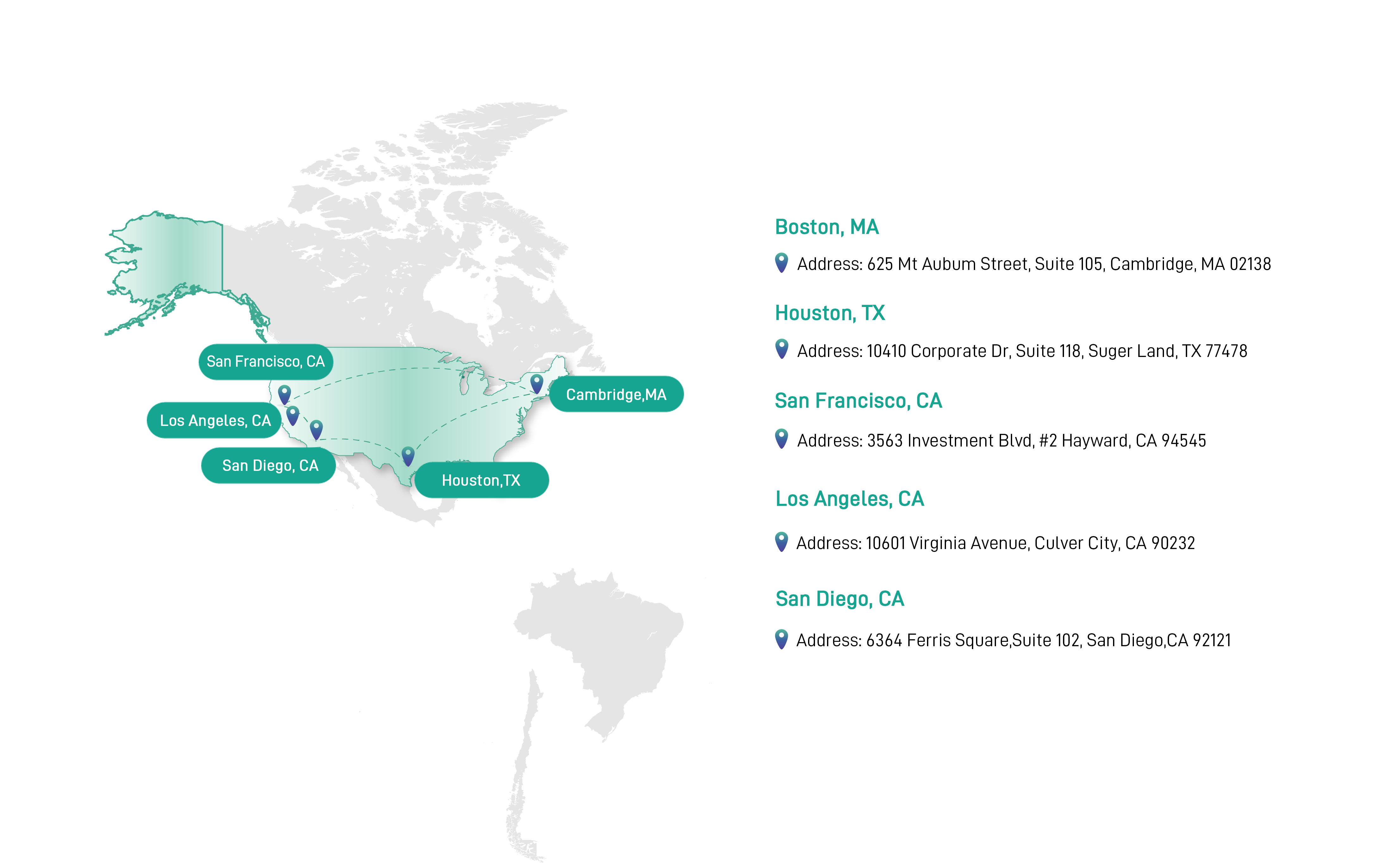
 3563 Investment Blvd, #2, Hayward, CA 94545sales.us@quintarabio.com1-617-789-611165 Grove St, Suite 102, Watertown, MA 02472sales.us@quintarabio.com1-346-239-997110410 Corporate Dr. Suite 118, Sugar Land, TX 77478
sales.us@quintarabio.com
1-424-549-091110601 Virginia Avenue, Culver City, CA 90232sales.us@quintarabio.com1-619-823-08956364 Ferris Square, Suite 102, San Diego, CA 92121Quintara Biosciences © 2025 All Rights Reserved | Site Map | Terms of Use | Privacy Policy

 Login
Login  Order
Order Contact Us
 Contact Us