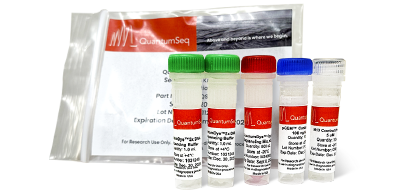
Quintara Deep Microbial WGS provides flexible short-read NGS coverage for cultured bacterial and yeast samples, with 30×, 300×, and 1,000× options to support different sequencing and variant-analysis needs. The workflow uses paired-end NGS reads for reference-based analysis, enabling detection of SNVs and short indels, with higher coverage supporting more sensitive allele-frequency and low-frequency variant analysis. Deep Microbial WGS is well suited for monitoring genetic changes across isolates, passages, time points, or engineered strains, as well as analyzing non-perfectly clonal microbial populations.

Promotion

30×, 300×, or 1,000× options

SNVs, short indels, and low-frequency variants

Compare isolates, passages, or production lots

Clear reference mapping and variant analysis
What Is Deep NGS WGS Used For?
Detect Identify small sequence variants | Measure Quantify allele frequencies | Monitor Track genetic changes over time | ||
Detect SNVs and short indels Verify expected engineered edits | Detect low-frequency variants Assess minority alleles in evolving populations | Monitor serial passages and production lots Compare related isolates across time points |
From genomic DNA QC and library preparation to high-depth NGS sequencing, reference mapping, and variant analysis, the workflow delivers reliable data for microbial genome analysis.

Cultured bacterial or yeast isolates

DNA QC and library preparation

30x,300x,1000x sequencing
Reference mapping and variant analysis

Sequencing data and analysis results
Service | Coverage | Sample Type | Price | Turnaround Time |
Deep Microbial WGS | 30x 300x 1000x | Bacteria | Starting from $75 | 5-10 Business Days |
Yeast | Starting from $105 |
* Your project clock starts once we receive your samples.
* DNA Extraction — $15 per sample. Available for both service options.

1. Purified gDNA
Concentration: 50 ng/μL
Volume: ≥30 μL
2. Cell Pellet
Volume:1-2mL
Pellet yeast maintained at freezing (dry ice/Ice pack)

1. Paired-End Short-Read FASTQ Files
2. Sequencing QC Report
Read count, total yield, base-quality metrics, and other finalized QC metrics
3. Reference Mapping & Variant Analysis Report
Available as a paid add-on
It increases the number of observations at many positions, but the practical detection limit also depends on sequencing and library errors, mapping quality, strand balance, local sequence context, contamination, and the analysis pipeline.
Not reliably. Short reads can provide very deep evidence, but repeated regions longer than the reads can still prevent unambiguous assembly. Long-Read or Hybrid is the better choice for genome completion.
Yes. The 1,000× workflow provides deep sequencing evidence that can support low-frequency variant detection. However, the practical detection limit depends on sequencing and library errors, mapping quality, local sequence context, contamination, and the analysis pipeline.
Not necessarily. Higher coverage increases the number of observations, but additional reads provide diminishing value when technical errors, mapping limitations, or other sources of background noise become the limiting factors.
Yes. Deep Microbial WGS is designed for reference-based analysis and requires a close, biologically appropriate reference genome for reliable variant detection and interpretation.
Deep Microbial WGS is primarily designed for SNVs and short indels. Higher coverage can also support allele-frequency analysis and detection of low-frequency variants when the analysis pipeline and reporting thresholds are appropriately validated.

Quintara delivers fast, affordable NGS sequencing using advanced platforms.
Discover more
Nanopore amplicon sequencing enables fast long‑read targeted validation.
Discover more
Quintara’s Nanopore plasmid sequencing: fast, affordable, nationwide.
Discover more
We Go Fast, You Go Forward
 sales.us@quintarabio.com
 1-617-789-6111
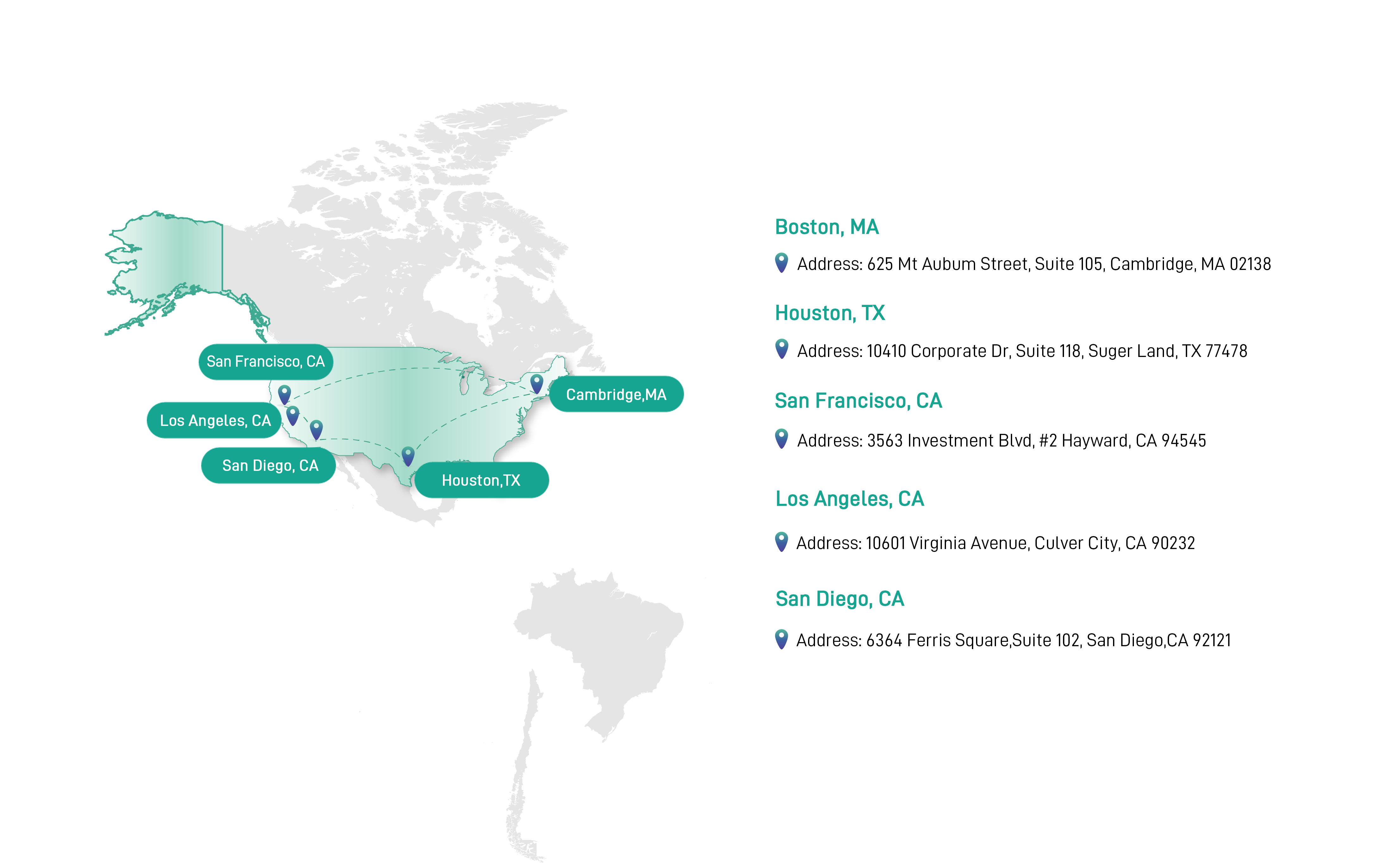
 3563 Investment Blvd, #2, Hayward, CA 94545sales.us@quintarabio.com1-617-789-611165 Grove St, Suite 102, Watertown, MA 02472sales.us@quintarabio.com1-346-239-997110410 Corporate Dr. Suite 118, Sugar Land, TX 77478
sales.us@quintarabio.com
1-424-549-091110601 Virginia Avenue, Culver City, CA 90232sales.us@quintarabio.com1-619-823-08956364 Ferris Square, Suite 102, San Diego, CA 92121Quintara Biosciences © 2025 All Rights Reserved | Site Map | Terms of Use | Privacy Policy

 Login
Login  Order
Order Contact Us
 Contact Us